Scope 3 emissions from ships you do not own
Total vessel emissions for port authorities, terminals and charterers, with every number traceable to its source.
Shipowners do not routinely provide fuel-consumption data to charterers and cargo owners, so companies rarely hold complete data for the voyages they charter. Emissions Dashboard & Reporting closes that gap. Built on the same digital twin technology that underpins every Blue Visby product, it reports total vessel emissions for port authorities, terminals and charterers, without requiring hardware, sensors or onboard installation. And without requiring any data from the shipowners.
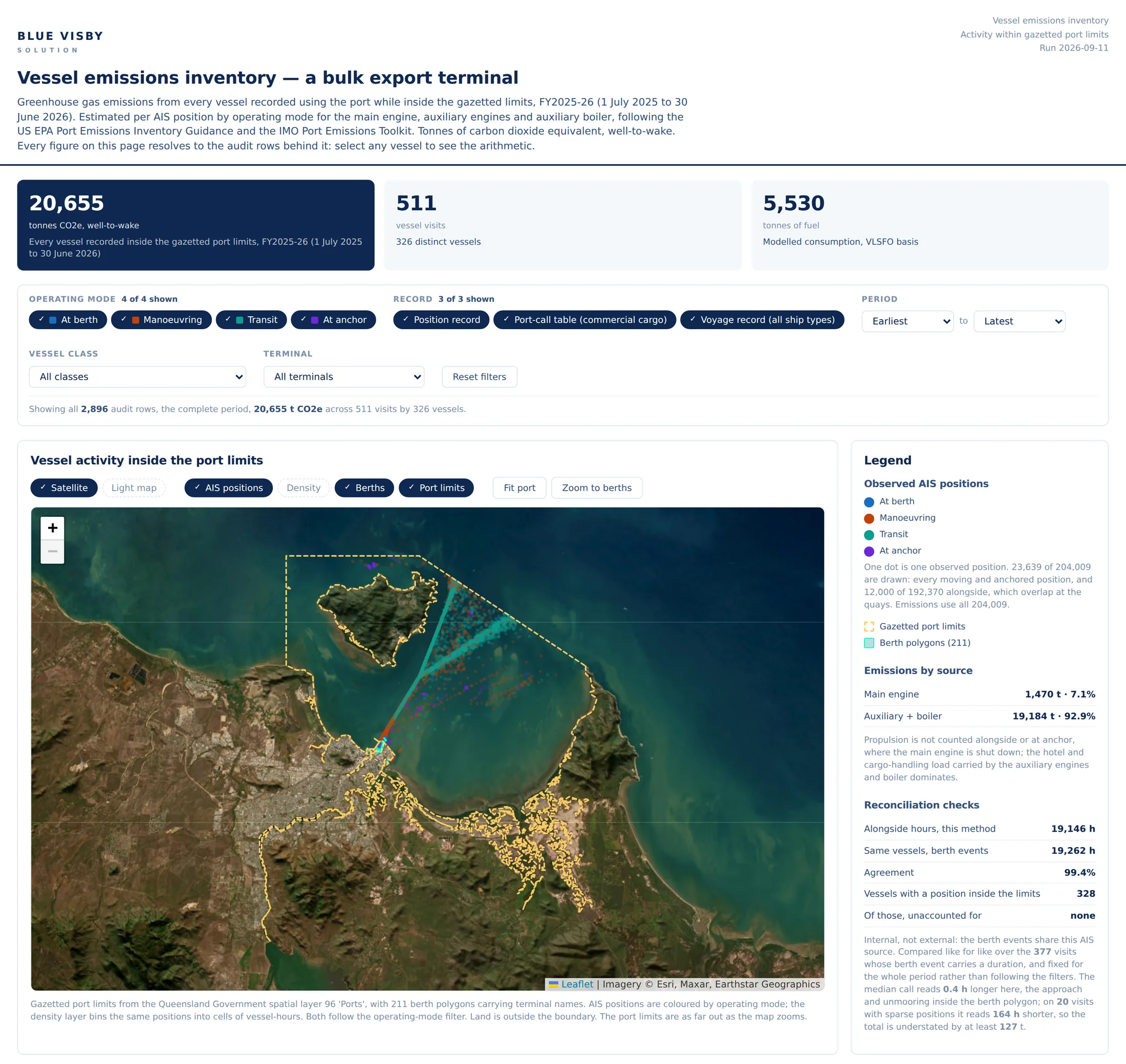
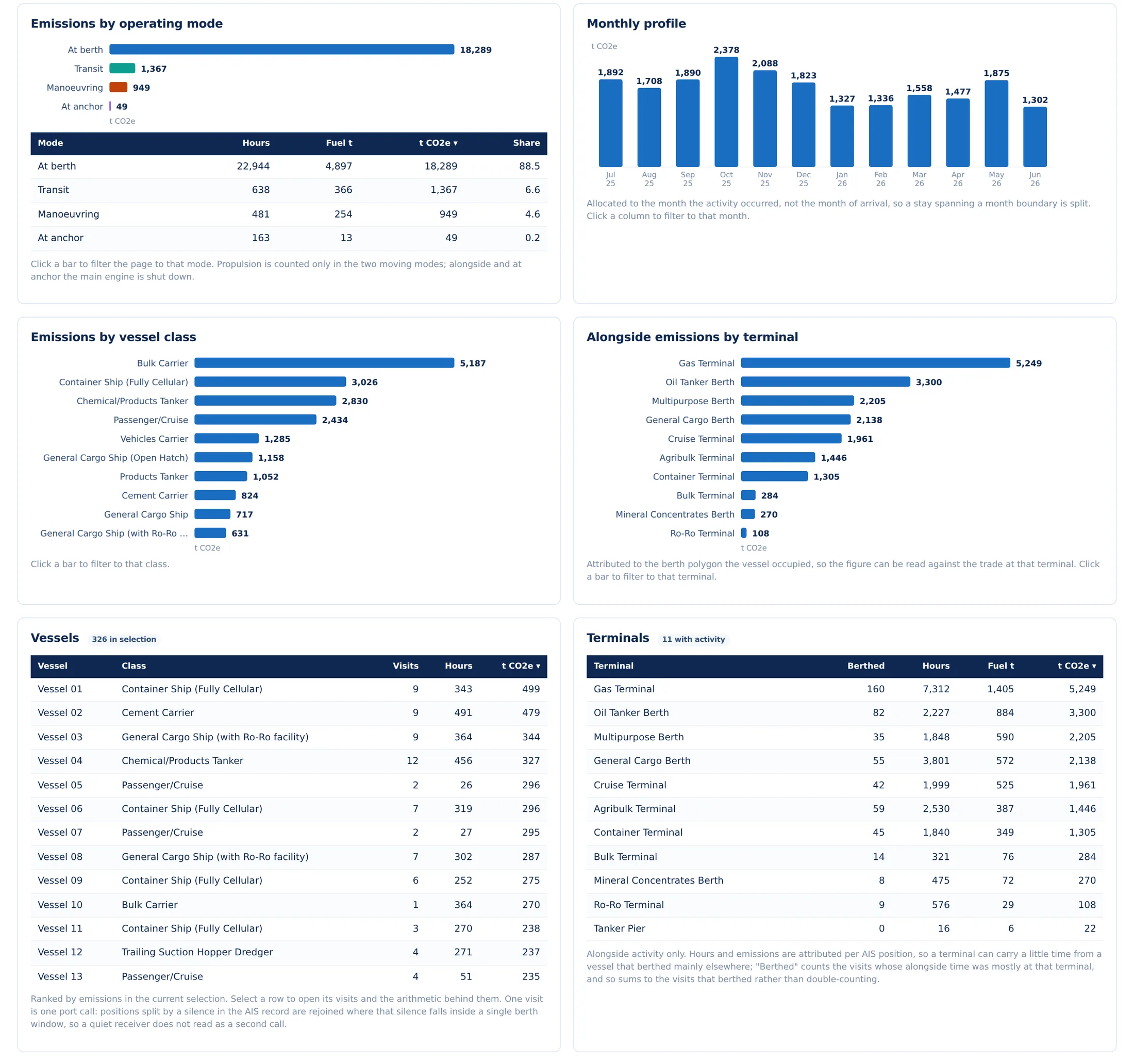
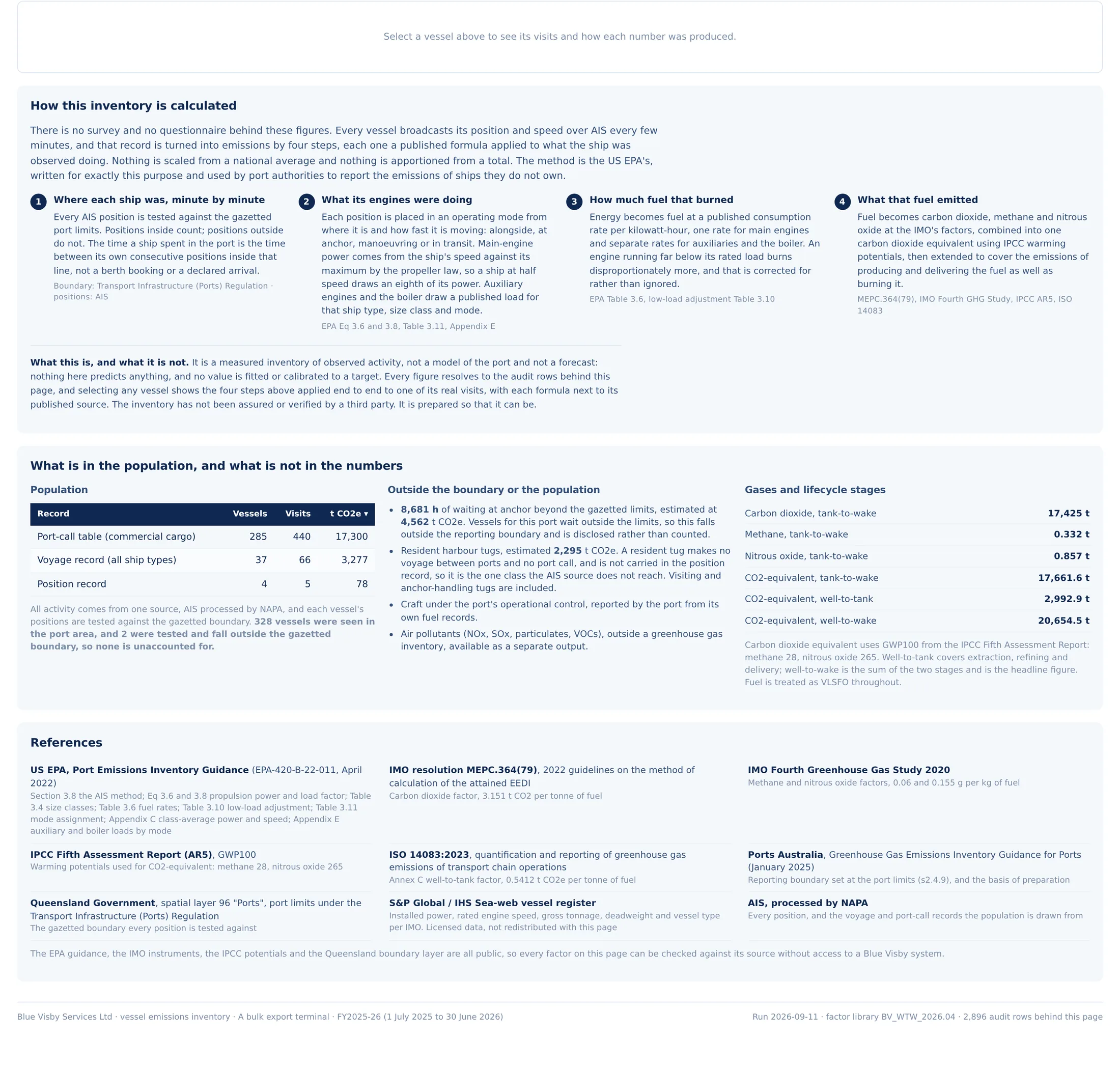
For every voyage, the dashboard reports total tank-to-wake CO₂ and CO₂e, carbon intensity per tonne of cargo carried, and a full breakdown between ballast and laden legs, so the empty miles are counted as well. Emissions are further analysed by cargo type, by trade route and by individual vessel, with a CII rating assigned to each voyage leg. The software calculates an activity-based estimate from AIS track data and vessel particulars: main-engine power is derived from installed propulsion power and AIS speed, with reference auxiliary-engine and boiler loads selected by vessel type, size and operating mode.
The dashboard is designed for port authorities, terminals and charterers who need vessel-level emissions data to support Scope 3 disclosure. Chartered ocean freight falls in Scope 3 Category 4 or Category 9 under the GHG Protocol, and the company determines the treatment for its own inventory. Every downloadable report is supported by a Basis of Preparation recording the voyages included, the reporting period, AIS coverage, emissions factors and document versions, so every number is traceable to its source. It is available as a live dashboard, as a downloadable PDF, and as raw data via CSV export. The dashboard does not replace regulatory verification under EU MRV or IMO DCS, which operate under separate regimes requiring primary fuel data audited by an accredited verifier.